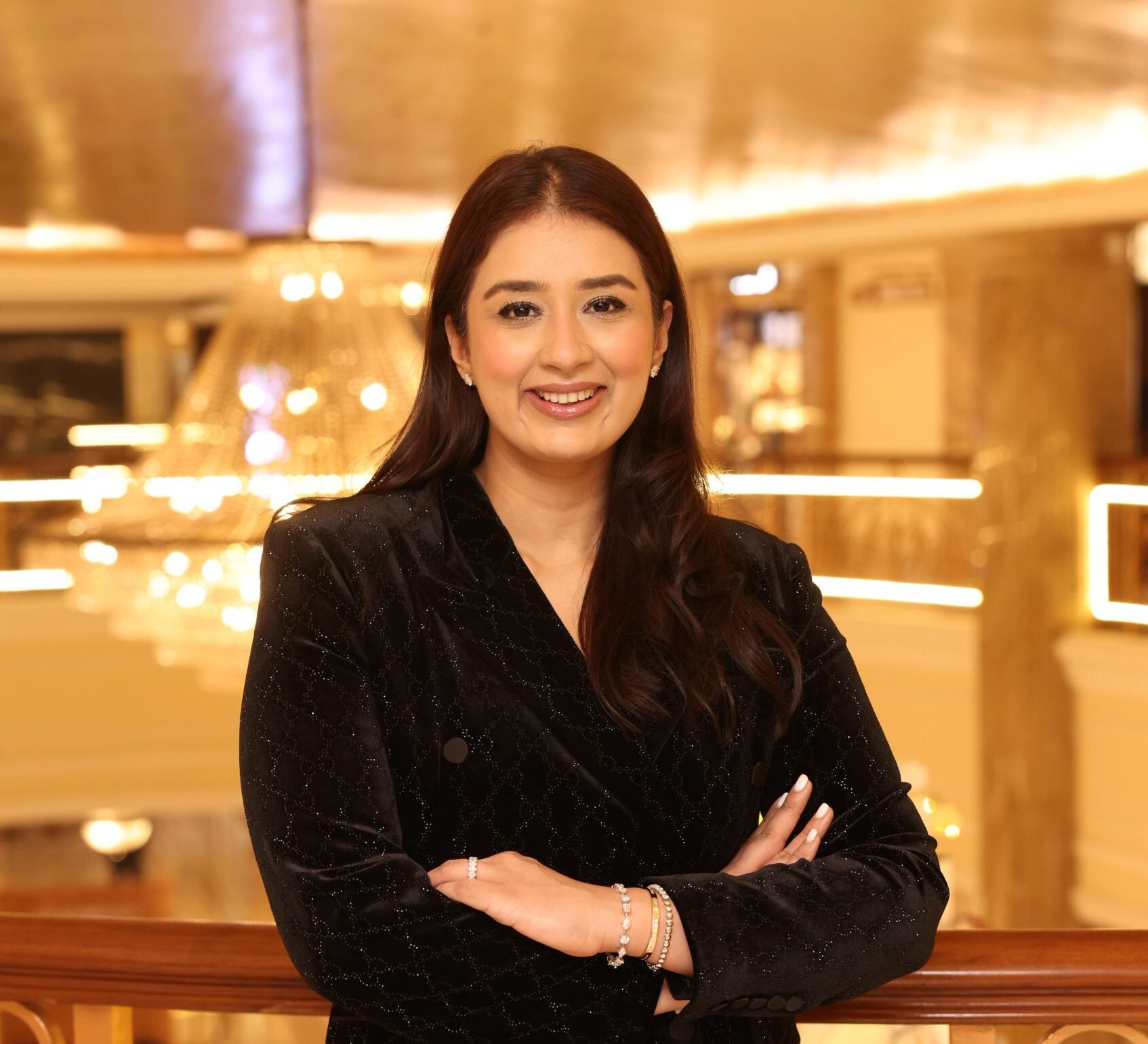









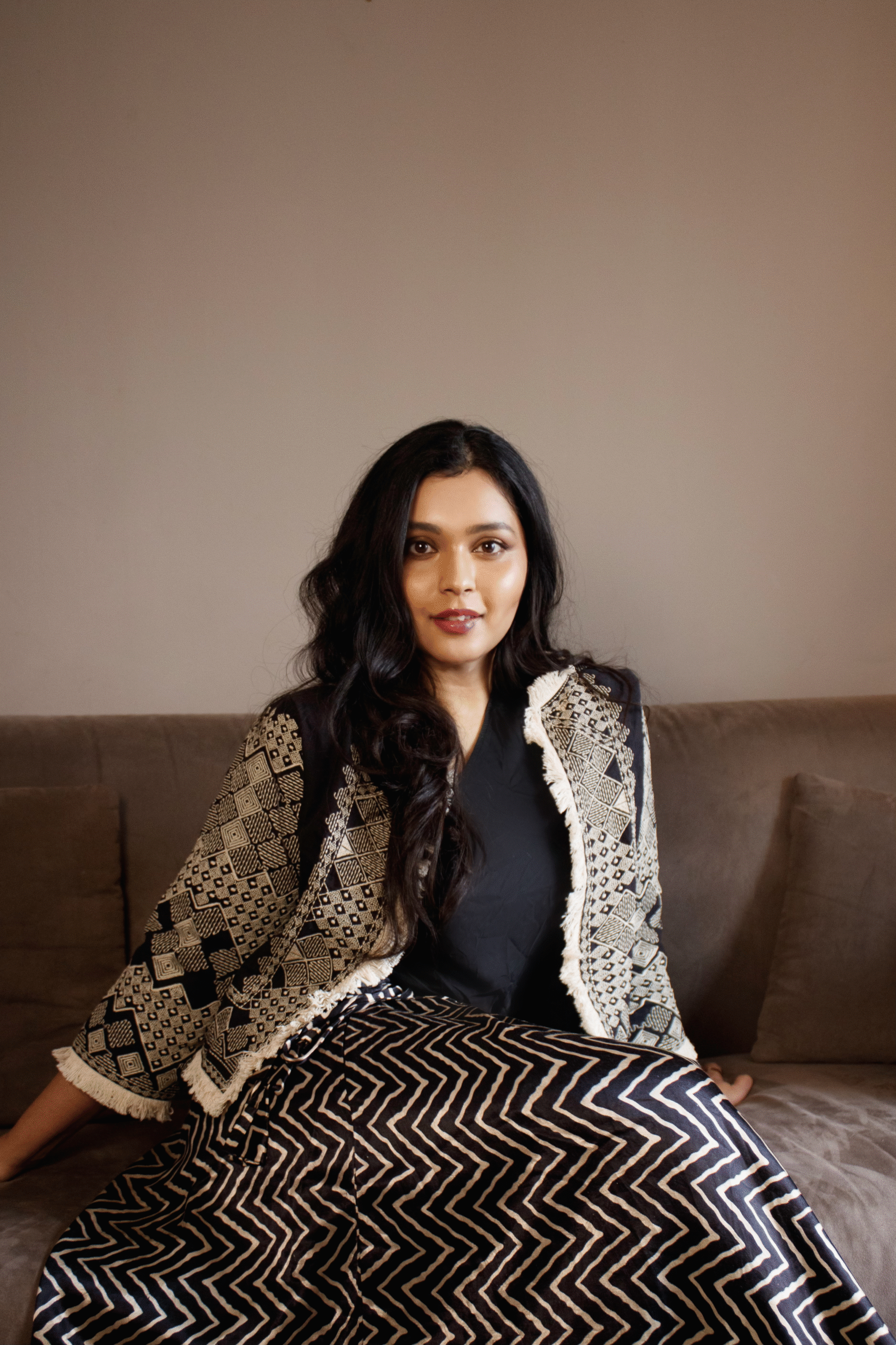
Building a brand today requires more than a strong aesthetic. It demands clarity of purpose, fluency in digital communication, and the ability to engage across cultures and markets. For Kritika Kohli, the founder of Maison Candelé and AGENCE KOHLI, these aren’t separate skills, they’re part of a single, integrated approach.
With a background in digital marketing and experience in both the Indian and European fashion industries, Kritika brings a multidisciplinary perspective to her work. Her brand reflects that range: rooted in craftsmanship, informed by data, and committed to values like representation and accountability. Along the way, she’s had to navigate the realities of growth, balancing creative integrity with business strategy, and pushing for diversity in spaces that often resist it.
The Synergy of Marketing and Fashion
Kritika Kohli’s entry into fashion wasn’t a pivot, it was an expansion. While running her digital marketing agency, Agence Kohli, she began to see clear parallels between brand strategy and fashion design. Both require precision, narrative depth, and an understanding of cultural context. Rather than treating the two as separate paths, she built them as complementary ventures.
Her work in marketing sharpened her instinct for storytelling and consumer behavior. These skills translated seamlessly into her approach to fashion, where each collection became more than a product line, it became a narrative with purpose. At the same time, her involvement in fashion kept her creative work grounded and expressive, pushing her to think beyond metrics and algorithms. The synergy between the two disciplines gave both businesses a unique edge.
Crucially, Kohli credits her ability to manage both to the teams she’s built around her. Delegation, collaboration, and clearly defined structures allow her to remain present in both businesses without compromising the vision behind either.
Navigating Industry Resistance and Building Authenticity
One of the persistent hurdles Kritika has faced in the fashion industry is pushing through resistance to perspectives that challenge the norm. As a young woman of color entering a traditionally exclusive space, she often encountered skepticism, subtle and overt, about her ability to lead, innovate, and define luxury on her own terms. Rather than seeking validation from institutions slow to adapt, she focused on building platforms that reflected her values.
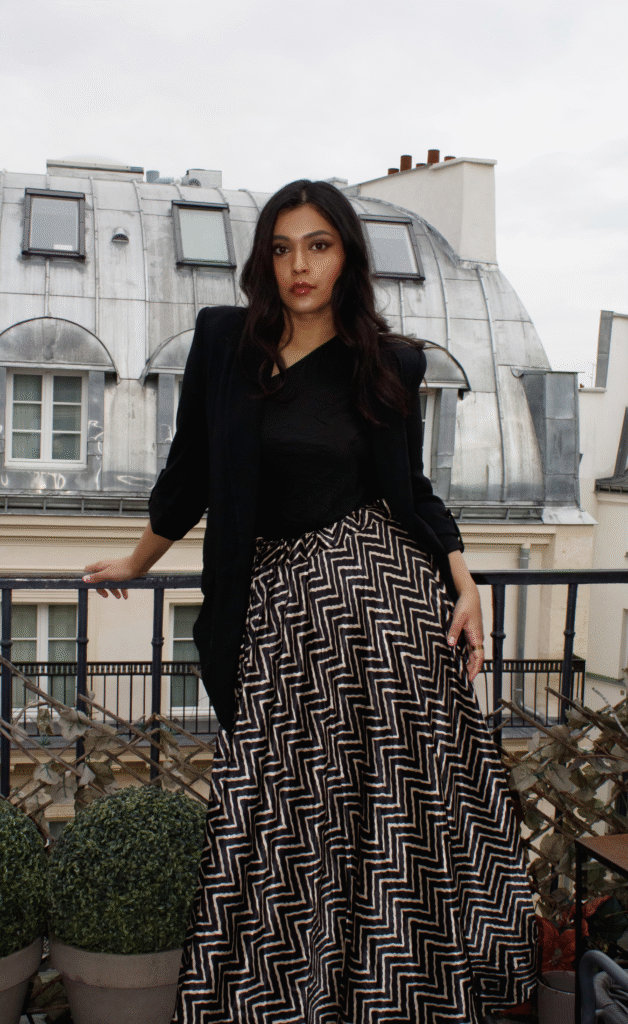
Her response was strategic rather than reactive. She cultivated partnerships with collaborators who respected different viewpoints and recognized the value of new ideas. By prioritizing substance over acceptance, and consistently delivering thoughtful, high-quality work, she reframed the conversation around identity, not as an obstacle to overcome, but as a strength that set her apart in an industry overdue for change.
Diversity and Empowerment: Core to Kritika’s Vision
Diversity and empowerment are not peripheral themes in Kritika’s work—they are foundational to her creative and business approach. From concept to execution, her fashion projects reflect a deliberate effort to widen representation and shift industry standards. This is evident in everything from casting choices that reflect a broader spectrum of identities, to collaborations with partners who share a commitment to inclusion.
Her production processes are designed to elevate underrepresented voices, ensuring that those behind the scenes—designers, artisans, creatives—are as diverse as those in front of the camera. Kohli views fashion not just as a commercial product but as a tool for cultural commentary. Through her work, she consistently challenges narrow definitions of beauty and power, offering space for individuality to be seen and celebrated on its own terms.
Embracing Authenticity in a Shifting Landscape
One of the most noticeable shifts in the fashion industry, as Kritika Kohli sees it, is the growing demand for authenticity over polished perfection. Today’s audiences are less interested in immaculate visuals and more drawn to the substance behind them—whether it’s ethical practices, honest storytelling, or an unfiltered glimpse into the creative process. This evolution has aligned closely with Kohli’s values.
Rather than resist this change, she has embraced it, shaping her brands around transparency and depth. Maison Candelé, her sustainable luxury label, reflects this ethos through its storytelling, production practices, and engagement with its audience. The focus is no longer on maintaining a flawless aesthetic but on creating a brand presence that is sincere, grounded, and human. For Kohli, this isn’t just a trend—it’s a long-awaited and welcome realignment of priorities in the fashion world.
Formative Experiences: Vivienne Westwood and GQ
Kohli’s time at Vivienne Westwood and GQ Magazine offered two sharply contrasting yet equally formative perspectives on the fashion industry. At Vivienne Westwood, she encountered fashion as a form of protest—bold, politically engaged, and unapologetically radical. GQ, on the other hand, showed her the art of refinement: how to craft messages with style, precision, and cultural relevance.
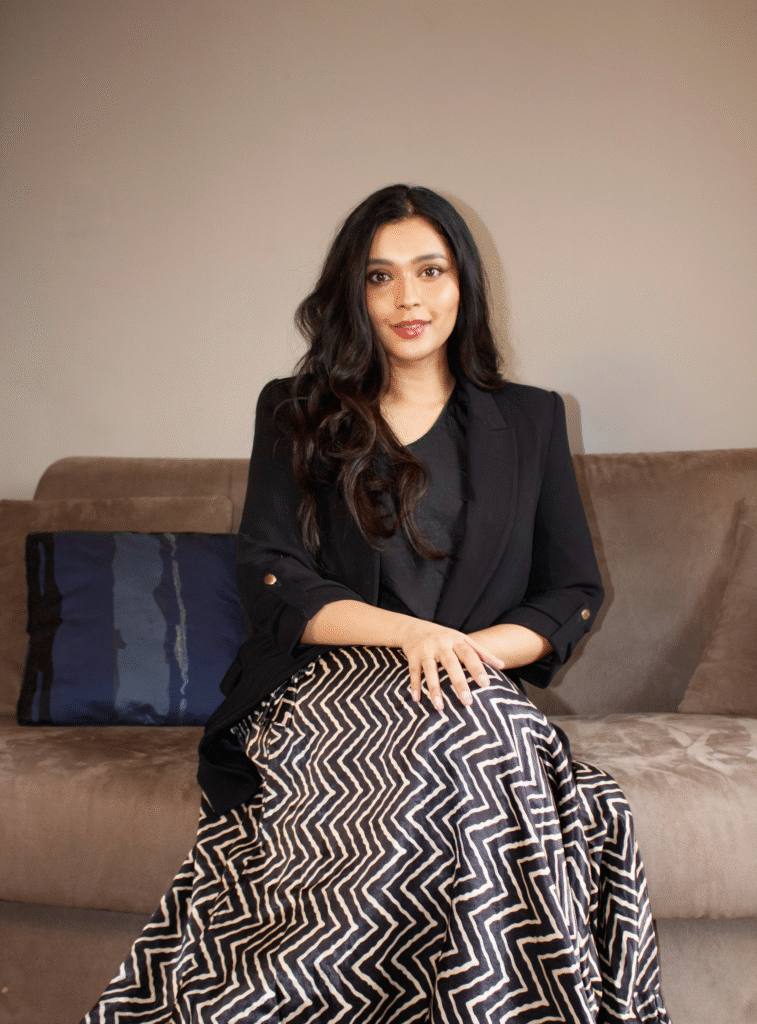
These dual influences helped shape her own creative voice—one that is unafraid to challenge norms while maintaining a sharp sense of aesthetics and communication. Today, that philosophy is evident across her work, particularly at Maison Candelé. Her campaigns reject conventional standards and deliberately cast models from diverse racial and cultural backgrounds. The goal isn’t to check boxes—it’s to create a space where every individual feels recognized and represented. Through this balance of rebellion and refinement, Kohli continues to question the industry’s legacy while helping write its future.
Kritika Kohli’s work is proof that the future of fashion belongs to those who aren’t afraid to bring their full selves to the table. By fusing digital insight with cultural intent, she’s created more than just a brand—she’s shaping a movement that puts truth, diversity, and purpose at the center. In doing so, she offers a new blueprint for what leadership in fashion can—and should—look like.